Tinctures
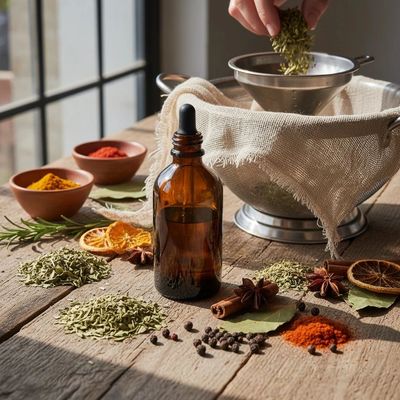
What is a tincture?
A tincture is a medicinal extract made by soaking herbs and spices in either alcohol, vegetable glycerin or apple cider vinegar. Alcohol is predominantly used to draw out the active constituents thereby creating a potent solution for medicinal purposes. Tinctures can be administered either internally, usually under the tongue or for some herbs and spices applied topically.
Alcohol based tinctures can be stored in a dark glass bottle in your kitchen cabinet and they can last indefinitely and are very stable. Tinctures made with vegetable glycerin should be stored in a dark glass bottle in the refrigerator (cold is key) and can last 1-5 years. Tinctures made with apple cider vinegar should be stored in dark glass bottles in the refrigerator and can last about 6 months.
Making a tincture with alcohol
Assuming you will make the tincture with alcohol you need to figure out what kind out alcohol you want to use. NEVER use wood alcohol ever it is extremely toxic. Rubbing alcohol should never be used unless the tincture is for external use only, it too is extremely toxic when ingested. Different herbs and spices require different percentages of alcohol depending on how hard it is to extract the medicinal constituents. Everclear is grain alcohol and is 95% alcohol by volume. You can actually run your car on it. Vodka is usually 40- 50% alcohol by volume although you can find vodka at much higher percentages depending on the brand you purchase. The higher the percentage the more efficient the extracting process is.
The rule of thumb when creating a tincture is to use lower proof alcohol (40-60%) like vodka for herbs, which are the leaf part of the plant or a dried herb. If you’re going to be using roots, bark, volatile oil or resins higher proofs are suggested (60-95%) The ratio of plant matter to liquid should be 1:5 or 1:2. This ratio is based on the density of the plant matter and how potent you want the tincture.
Equipment
You will need
A quart sized Mason jar
Plant matter
Vodka or everclear
Funnel
Cheese cloth
Colander
Large pot
A dark bottle with a dropper
Basic alcohol Tincture Recipe
Directions
Prepare your fresh herb by finely chopping it. If you are using dried herb, it's fine the way it is.
Fill the jar with the fresh herb or if you're using dried herb fill it halfway.
Pour the alcohol into the jar ensuring the plant matter is covered with 1 inch of headspace.
Seal, label and date the jar, place it in a cool dark place, shake the jar two to three times a day for the next two weeks.
When it’s ready, place a colander over a large bowl. Line the colander with several layers of cheese cloth and pour the contents of the mason jar into it. Try and get as much of the tincture into the colander.
Take the corners of the cheese cloth and pull them together and squeeze as much of the tincture into the colander as you can. Don't let any of the plant material get into the final product it will call spoilage. From the pot use a small funnel and pour the tincture into the dark bottle. Seal, label and date it. Refrigerate it
This will keep indefinitely.
Use Instructions
To use a tincture, you can generally apply 20-40 drops three times a day for most common herbs. They can be applied under the tongue, or you can put it an infusion. Be sure you understand how the herb itself can be utilized. Some herbs or spices are for external use only for instance tea tree oil is a good example. Always talk to an herbalist to make sure the herb is safe for internal consumption and your doctor to make sure it will not interfere with any medication you are on.
How to Make a Glycerite

Making a tincture with glycerin
There are a few good reasons to make a tincture from vegetable glycerin. it's alcohol free so it's perfect for kids, pregnant women, pets and folks who have alcohol issues. It has a sweet taste; Diabetics can use this because it doesn't cause sugar spikes. It is a good moisturizer if using it externally. A really good attribute is that it is capable of extracting constituents' alcohol misses. The problem with glycerin is that it's not as potent and possibly a larger dose may be necessary to achieve the same results and it has a shorter shelf life.
Equipment
You will need
a quart sized Mason jar
Plant matter
vegetable glycerin
Funnel
colander
Coffee filter or muslin or cheese cloth
A dark bottle with a dropper
Directions
Prepare your fresh herb by finely chopping it. If you are using dried herb, it's fine the way it is.
Fill the jar with the fresh herb or if you're using dried plants fill it halfway.
If you are using fresh herb pour the glycerin in the bottle ensuring the plant material is completely covered leaving 1 inch of headspace.
If you are using dry plant materiel dilute the glycerin with distilled water in a 3:1 ratio (3 parts glycerin to one part water).
Seal, label and date the jar, place it in a cool dark place, shake the jar two to three times a day for the next 4-6 weeks. During this time top off the glycerite with glycerin as necessary if the plant material appears above the liquid line in the jar.
When it’s ready, place a colander over a large bowl. Line the colander with several layers of cheese cloth and pour the contents of the mason jar into it. Try and get as much of the tincture into the colander as possible.
Take the corners of the cheese cloth and pull them together and squeeze as much of the tincture into the colander as you can. Don't let any of the plant material get into the final product it can cause spoilage. From the pot use a small funnel and pour the tincture into the dark bottle. Seal, label and date it. Refrigerate it
Glycerites have a shelf life of approximately one to two years if stored in a cool, dark place.
usage
To use the glycerite, the adult dosage is typically 30-60 drops (1/4 – 1/2 teaspoon), 3 times daily, taken in a little water or infusion. for most common herbs. They can also be applied under the tongue, Be sure you understand how the herb itself can be utilized. Some herbs or spices are for external use only for instance tea tree oil is a good example. Always talk to an herbalist to make sure the herb is safe for internal consumption and your doctor to make sure it will not interfere with any medication you are on.
Apple cider vinegar tincture
How to make tincture with apple cider vinegar
Apple cider vinegar (ACV) tinctures offer advantages like supporting digestion, weight management, and blood sugar control due to acetic acid, while their antioxidant content helps fight germs and inflammation, potentially benefiting skin and immunity; they're also used in herbal remedies for colds and muscle aches . Apple cider vinegar (ACV) disadvantages stem from its high acidity, potentially causing tooth enamel erosion, throat/stomach irritation (heartburn), and slower stomach emptying (leading to fullness/bloating). It can also interact with medications (like insulin, diuretics), lower potassium levels, and cause skin burns if undiluted, requiring dilution in water and doctor consultation, especially for diabetics.
Equipment
You will need
a quart sized Mason jar
Plant matter
apple cider vinegar
Funnel
colander
cheese cloth
A dark bottle with a dropper
Directions
Prepare your fresh herb by finely chopping it. If you are using dried herb, it's fine the way it is.
Fill the jar with the fresh herb or if you're using dried herb or bark fill it 1/3.
Pour the apple cider vinegar into the jar ensuring the plant matter is covered with 1 inch of headspace.
Seal, label and date the jar, place it in a cool dark place, shake the jar two to three times a day for the next two to six weeks.
When it’s ready, place a colander over a large bowl. Line the colander with several layers of cheese cloth and pour the contents of the mason jar into it. Try and get as much of the tincture into the colander.
Take the corners of the cheese cloth and pull them together and squeeze as much of the tincture into the colander as you can. Don't let any of the plant material get into the final product it will call spoilage. From the pot use a small funnel and pour the tincture into the dark bottle. Seal, label and date it.
This will keep for 2 to 5 years or even longer in a cool, dark pantry. .